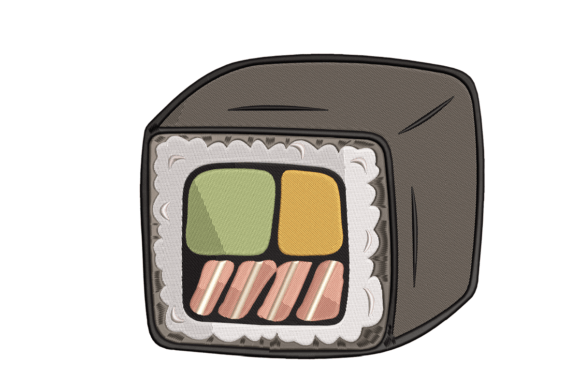
Sushi
First Impressions: A Playful yet Professional Design
The Sushi embroidery design immediately strikes a balance between fun and professionalism. Its clean lines and recognizable shape convey a sense of modernity and approachability, making it ideal for businesses that want to appeal to both casual and upscale markets. The design feels friendly and relatable, which is perfect for food-related brands aiming to connect with their audience on a personal level.
Design Strengths for Business Use
Sushi offers versatility that makes it suitable for a wide range of applications in small business merch. From embroidered patches to custom apparel, the design maintains its clarity and visual appeal. The simplicity of the design allows it to be easily adapted to different sizes and formats without losing its charm or recognizability.
Sushi is particularly well-suited for use as an embroidered patch, where its bold outlines and distinct shape can stand out on uniforms, caps, or tote bags. It also works well as a chest logo accent or sleeve detail, adding a subtle but meaningful touch to workwear or branded clothing. The design's compact size ensures it doesn't overwhelm the product while still making a strong visual statement.
Real-World Applications for Small Business Merch
As a machine embroidery design, Sushi is ready for commercial use in various contexts. It could be used as a brand identity element on aprons, tote bags, and even product packaging accents. For example, a local café might incorporate Sushi into apron embroidery or as a cap embroidery detail to reinforce brand recognition among staff and customers.
It’s also a great choice for custom apparel such as t-shirts, hoodies, or work shirts. When applied to work shirts, Sushi can serve as a subtle yet memorable branding tool. Similarly, Sushi could be used as a tote bag design or product label to add a unique flair to merchandise without overshadowing the main product.
Considerations for Commercial Embroidery
While Sushi has many strengths, there are a few areas where it should be used with care. The design’s detailed outlines and textured elements may require careful consideration when applied to small patch sizes or curved surfaces. Ensuring proper hoop size and using the right stabilizer will help maintain the design's integrity during the embroidery process.
Additionally, the thread colors and stitch density should be reviewed to ensure they work well with the intended fabric texture. For instance, using Sushi on dark uniforms may require higher contrast thread colors to maintain visibility. Testing the design in black and white before final production is recommended to identify any potential issues with design assets or finished product quality.
Impact on Brand Identity and Customer Engagement
Using Sushi in your brand identity can significantly enhance customer trust and recognition. Its friendly and approachable nature aligns well with food and dining businesses looking to create a welcoming atmosphere. By incorporating Sushi into your small business merch, you're not only reinforcing your brand but also creating a more engaging experience for your customers.
The design’s ability to be used across multiple platforms—such as printable mockups, digital embroidery files, and custom apparel—ensures consistency in your branding efforts. This visual consistency helps build a stronger connection with your audience and supports long-term brand loyalty.
Practical Tips for Embroidery Designers
As an experienced embroidery designer, I recommend testing Sushi on real fabric before full-scale production. Checking the design’s performance on different textures and colors will help ensure it looks great in all situations. Also, consider how it fits within your overall design assets and whether it complements other branding elements.
Before using Sushi commercially, make sure you have the proper commercial licensing. Confirming this will protect your business and ensure you’re using the design correctly. Creating a printable mockup for client approval is also a wise step, allowing for adjustments before final production.
Finally, always use the appropriate stabilizer and review the thread color contrast to ensure the best possible result. These small steps can make a big difference in the quality of your finished product and the overall success of your small business merch strategy.